
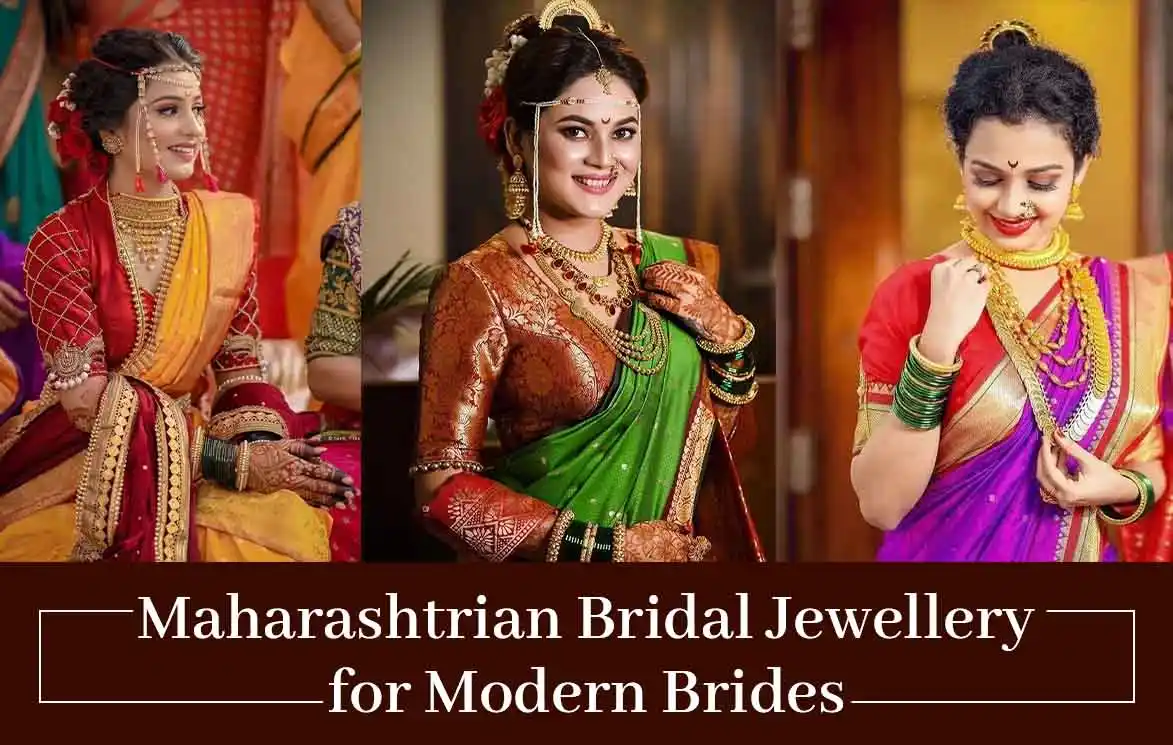
Grace in Gold – The Story Behind Every Maharashtrian Bride’s Shine
Weddings in India are nothing short of majestic. But when it comes to Maharashtrian bridal fashion, there’s one element that truly steals the show Maharashtrian bridal jewellery. This isn’t just gold and gemstones it’s a legacy passed down through generations, a symbol of cultural pride, and an embodiment of timeless elegance.
From the iconic nath that graces the bride’s nose to the intricate green glass bangles that hold stories of prosperity, every ornament has its own tale. But with modern brides balancing tradition with personal style, how do you choose the perfect Maharashtrian bridal jewellery set that reflects both heritage and individuality?
In this blog, we’ll take you through the essentials of Maharashtrian bridal adornments, the meaning behind each piece, styling tips, and how to blend the classic with the contemporary.
1. The Soul of Tradition: Essentials of Maharashtrian Bridal Jewellery
Each piece in a Maharashtrian bridal look isn’t just decorative it carries meaning, blessings, and tradition. Let’s explore the key components:
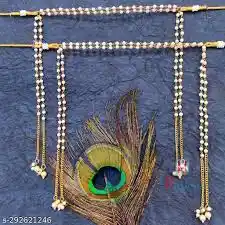
Mundavalya
A unique string of pearls or gold worn across the forehead and tied behind the ears, the mundavalya signifies the bride’s readiness for marriage. Both Maharashtrian grooms and brides wear this ornament, making it a powerful symbol of equality.
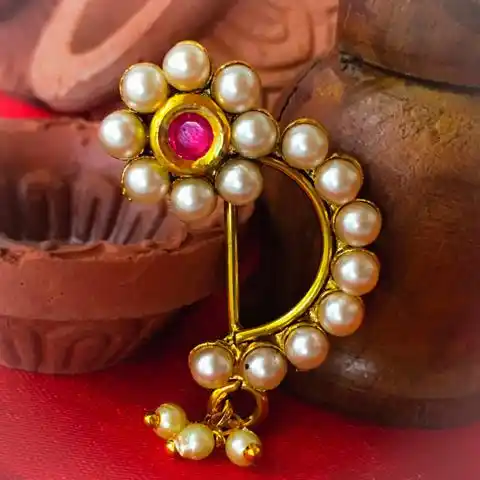
Maharashtrian Bridal Nath
Perhaps the most iconic of all, the nath (nose ring) is instantly recognisable. With its delicate curve and embedded pearls or coloured stones, it adds a regal charm to the bride’s face. A traditional Maharashtrian bridal nath is usually crescent-shaped and encrusted with pearls, emeralds, or rubies.
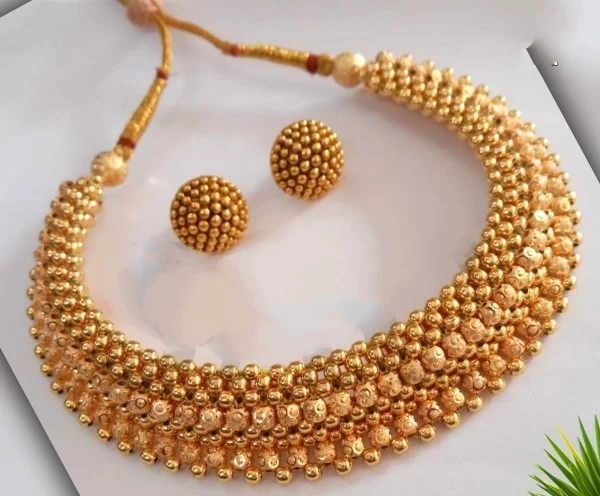
Thushi and Chinchpeti
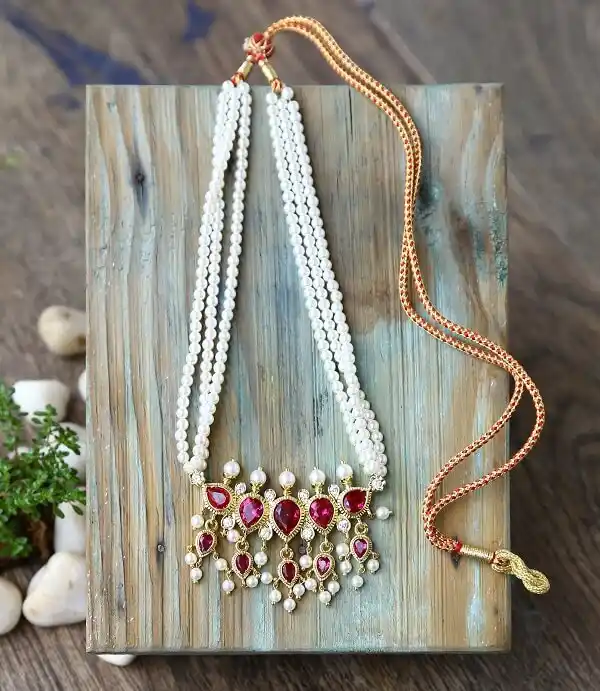
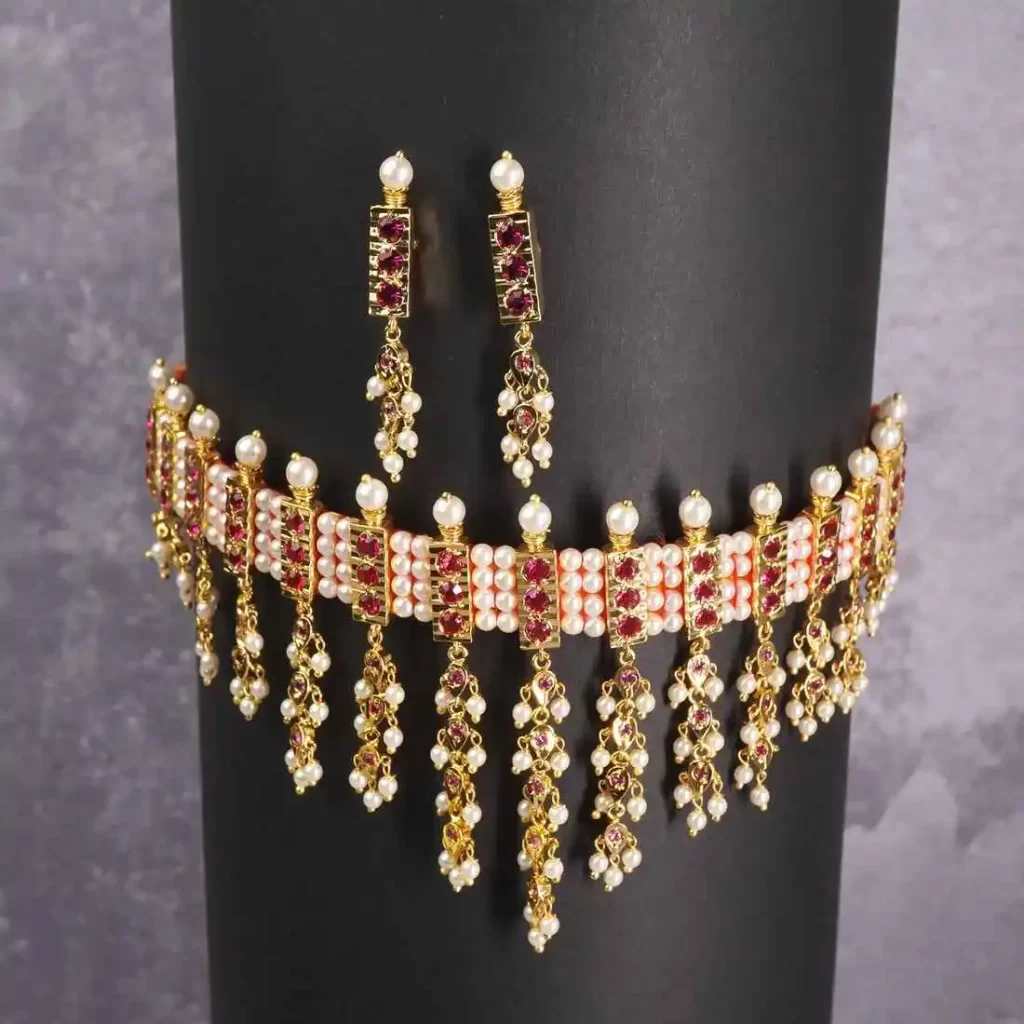
These chokers are known for their tightly woven golden beads and intricate craftsmanship. The thushi sits closer to the neck, while the chinchpeti is slightly longer, creating a graceful layered effect.
Mohan Mala and Tanmani
Both are layered necklaces, often passed down as family heirlooms. While the mohan mala has rounded gold beads, the tanmani typically features a stunning gemstone pendant.
Vaaki and Bajubandh
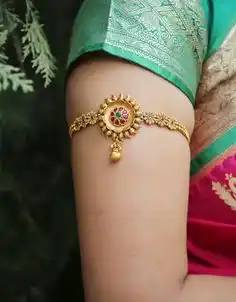
Worn on the upper arms, these armlets are engraved with motifs inspired by nature and mythology bringing goddess-like poise to the bridal look.
2. The Gold Standard: Why Maharashtrian Bridal Gold Jewellery Is So Beloved
Gold is more than a metal in Indian weddings it’s an emotion. In Maharashtra, gold jewellery signifies not just wealth, but protection, blessings, and continuity. Here’s why Maharashtrian bridal gold jewellery continues to be treasured:
- Spiritual significance: Gold is considered pure and auspicious, believed to attract divine energy.
- Investment value: Gold jewellery is an asset that appreciates over time, making it both beautiful and practical.
- Customisation & craftsmanship: Artisans handcraft each piece with traditional techniques, often customising it to the family’s heritage patterns or the bride’s horoscope.
Today, many brides are combining traditional gold with gemstones, kundan, or even fusion pieces to suit their bridal attire giving a fresh take on timeless elegance.
3. The Role of Maharashtrian Bridal Bangles
When a bride walks down the aisle with her hands adorned in vibrant bangles, each click of glass echoes with joy and tradition. The Maharashtrian bridal bangles, or chooda, are especially significant.
Key Elements of the Bridal Bangle Set:
- Green Glass Bangles (Chooda): Symbolising fertility and prosperity, green bangles are a must for Maharashtrian brides.
- Gold Bangles (Patlya): Worn in pairs, these are handcrafted and often gifted by the groom’s family.
- Tode (Thick Gold Kadas): Heavy and elaborately designed, these are statement bangles worn on both hands.
Brides today also experiment with stacking bangles in creative ways—mixing traditional green with pearls, meenakari, or kundan sets to create a personalised touch.
4. Curating the Perfect Bridal Jewellery Set
Choosing the right bridal jewellery set is about balancing tradition, personal style, and practicality. Here’s a quick checklist to help:
- Complement your saree: Paithani or Nauvari sarees often feature rich weaves in gold and jewel tones. Choose jewellery that complements rather than competes.
- Layering is key: Combine chokers like thushi with longer pieces like mohan mala for a royal look.
- Don’t forget the small things: Toe rings, anklets, hair ornaments (veni phool), and waistbands (kamarbandh) complete the bridal look.
- Comfort counts: Ensure your jewellery is lightweight enough for a long day of rituals, dancing, and photos.
Tip: Try your full bridal look (makeup, hair, jewellery, and saree) at least once before the big day to avoid last-minute surprises.
5. Where Style Meets Setting: Matching Jewellery with Your Wedding Venue
If you’re planning a wedding at an elegant venue, your jewellery choices can amplify the grandeur of your surroundings.
Jewellery Tips Based on Venue Type:
- Indoor Banquets (like Kiaraa): Go bold with heavy gold sets, kundan chokers, and intricate nose rings. The controlled lighting enhances the jewellery’s brilliance.
- Outdoor Ceremonies: Opt for pieces with better durability. Avoid delicate thread-based jewellery or heavy pieces that may not fare well under the sun.
- Destination Weddings: Choose versatile and travel-friendly sets that can be reused for multiple functions.
The right jewellery can transform your bridal presence—so make sure it aligns with your venue’s vibe and your comfort level.
Takeaways: Tradition, Gold, and Grace
To summarise:
- Maharashtrian bridal jewellery is deeply rooted in culture and symbolism.
- Gold remains the preferred metal, representing not just beauty but blessings.
- Every ornament—from the nath to the thushi holds spiritual and emotional value.
- Your jewellery should be thoughtfully chosen to reflect both your heritage and personal style.
- Consider the venue and outfit before finalising your look for visual harmony.
With these insights, you’re ready to create a bridal look that’s both breathtaking and meaningful.
Conclusion: Your Shine, Your Story
A bride’s jewellery is more than adornment it’s a narrative of love, culture, and identity. As a Maharashtrian bride, you carry the weight of tradition on your shoulders and the sparkle of a new beginning in your smile.
So whether you’re walking down the aisle in a grand marriage hall in Thane West like Kiaraa Banquet or exchanging vows at a temple, let your Maharashtrian bridal jewellery be a celebration of who you are rooted in tradition, elevated by style.
Let every necklace, every bangle, every gleam of gold tell your story.